Wow! I discovered today through a Google alert (wonderful things!) that The Darling Strumpet is now available for pre-order on Amazon and Amazon UK. Its publication date is Jan. 4, 2011....
Also, the first two of the series of monthly articles I'm writing about the events in the corresponding months of 1660 are now up.
The inspiration for the series is that I had hoped that Darling Strumpet would be published this year to take advantage of the fact that 2010 is the 350th anniversary of the Restoration of Charles II, the reopening of the theatres that had been closed under Cromwell, and the first appearance of an actress on an English stage. Then I realized that it didn't matter - 1660 was a phenomenally eventful and important year, and I could write an article each month from May, the month in which Charles returned to London from his long exile, until January, when the book will be published. A different blog or website will host each article.
The May host is Hoydens and Firebrands:
http://hoydensandfirebrands.blogspot.com/2010/05/may-1660-by-gillian-bagwell.html
The June host is Reading the Past:
http://readingthepast.blogspot.com/2010/05/guest-post-from-gillian-bagwell-june.html
The July host will be Raucous Royals:
http://raucousroyals.com
Tuesday, June 8, 2010


The Darling Turkish Strumpet
I'm thrilled to say that Taryn Fagerness, my foreign rights agent, has sold TURKISH rights to The Darling Strumpet! Somehow Turkey seems like a culture vastly different than Nell's England. But my father has just sent me a book called Aziyade by Pierre Loti, which he says has fascinated the Turks for many years. He visited Istanbul last year, and stayed at a hotel called Aziyade, on a street called Piyerloti - a corruption of the author's name! I haven't read the book yet, but the title character apparently has many points of similarity with Nell, and is based on a young woman with whom the author -- actually a 19th century French naval officer named Julian Viaud -- fell in love! I'll have to read it!
Tuesday, February 2, 2010
Happy Birthday, Nell!
Nell would have been 360 today. She was born on February 2, 1650, according to a horoscope prepared for her during her life, though for some reason her place of birth wasn't given - maybe because she didn't know. It was likely London, though it might also have been Oxford, and there have also been claims for Herefordshire.
February 2 is Candlemas, a day rich in tradition, as reflected by the excerpts below from Wikipedia. (http://en.wikipedia.org/wiki/Presentation_of_Jesus_at_the_Temple#Traditions_and_superstitions)
"Down with the rosemary, and so
Down with the bays and mistletoe;
Down with the holly, ivy, all,
Wherewith ye dress'd the Christmas Hall"
— Robert Herrick (1591–1674), "Ceremony upon Candlemas Eve"
As the poem by Robert Herrick records, the eve of Candlemas was the day on which Christmas decorations of greenery were removed from people's homes; for traces of berries, holly and so forth will bring death among the congregation before another year is out.
Another tradition holds that anyone who hears funeral bells tolling on Candlemas will soon hear of the death of a close friend or relative; each toll of the bell represents a day that will pass before the unfortunate news is learned.[
Traditionally the Western term "Candlemas" (or Candle Mass) referred to the practice whereby a priest on 2 February blessed beeswax candles for use throughout the year, some of which were distributed to the faithful for use in the home.
Candlemas occurs 40 days after Christmas, and its religious signifance relates to The Feast of the Presentation of Jesus at the Temple, among the most ancient feasts of the Christian Church, which commemorates an event described in the Gospel of Luke 2:22–40.
According to the gospel, Mary and Joseph took the baby Jesus to the Temple in Jerusalem forty days after his birth to complete Mary's ritual purification after childbirth, and to perform the redemption of the firstborn, in obedience to the Law of Moses (Leviticus 12, Exodus 13:12-15, etc.).
Upon bringing Jesus into the temple, they encountered Simeon the Righteous. The Gospel records that Simeon had been promised that "he should not see death before he had seen the Messiah of the Lord." (Luke 2:26) Simeon prayed the prayer that would become known as the Nunc Dimittis, or Canticle of Simeon, which prophesied the redemption of the world by Jesus:
"Lord, now you are letting your servant go in peace, just as you said. 30 I have seen with my own eyes the one you have sent to save people. 31 You have made this way for all peoples to be saved. 32 He is a light which will shine for those who do not know God. He is the one who will bring praise to your people Israel." (Luke 2:29-32).
In Scotland, until a change in the law in 1991, and in much of northern England until the 18th century, Candlemas was one of the traditional quarter days when quarterly rents were due for payment, as well as the day or term for various other business transactions, including the hiring of servants.
In the United Kingdom, good weather at Candlemas is taken to indicate severe winter weather later: "If Candlemas Day is clear and bright, / winter will have another bite. / If Candlemas Day brings cloud and rain, / winter is gone and will not come again."[9]. It is also alleged to be the date that bears emerge from hibernation to inspect the weather as well as wolves, who if they choose to return to their lairs on this day is interpreted as meaning severe weather will continue for another forty days at least.[citation needed] The same is true in Italy, where it is called Candelora.
It seems this belief is the likely source of the American tradition of Groundhog Day.
The earliest American reference to Groundhog Day can be found at the Pennsylvania Dutch Folklore Center at Franklin and Marshall College:
4 February 1841 — from Morgantown, Berks County (Pennsylvania) storekeeper James Morris' diary …"Last Tuesday, the 2nd, was Candlemas day, the day on which, according to the Germans, the Groundhog peeps out of his winter quarters and if he sees his shadow he pops back for another six weeks nap, but if the day be cloudy he remains out, as the weather is to be moderate." [1]
February 2 is Candlemas, a day rich in tradition, as reflected by the excerpts below from Wikipedia. (http://en.wikipedia.org/wiki/Presentation_of_Jesus_at_the_Temple#Traditions_and_superstitions)
"Down with the rosemary, and so
Down with the bays and mistletoe;
Down with the holly, ivy, all,
Wherewith ye dress'd the Christmas Hall"
— Robert Herrick (1591–1674), "Ceremony upon Candlemas Eve"
As the poem by Robert Herrick records, the eve of Candlemas was the day on which Christmas decorations of greenery were removed from people's homes; for traces of berries, holly and so forth will bring death among the congregation before another year is out.
Another tradition holds that anyone who hears funeral bells tolling on Candlemas will soon hear of the death of a close friend or relative; each toll of the bell represents a day that will pass before the unfortunate news is learned.[
Traditionally the Western term "Candlemas" (or Candle Mass) referred to the practice whereby a priest on 2 February blessed beeswax candles for use throughout the year, some of which were distributed to the faithful for use in the home.
Candlemas occurs 40 days after Christmas, and its religious signifance relates to The Feast of the Presentation of Jesus at the Temple, among the most ancient feasts of the Christian Church, which commemorates an event described in the Gospel of Luke 2:22–40.
According to the gospel, Mary and Joseph took the baby Jesus to the Temple in Jerusalem forty days after his birth to complete Mary's ritual purification after childbirth, and to perform the redemption of the firstborn, in obedience to the Law of Moses (Leviticus 12, Exodus 13:12-15, etc.).
Upon bringing Jesus into the temple, they encountered Simeon the Righteous. The Gospel records that Simeon had been promised that "he should not see death before he had seen the Messiah of the Lord." (Luke 2:26) Simeon prayed the prayer that would become known as the Nunc Dimittis, or Canticle of Simeon, which prophesied the redemption of the world by Jesus:
"Lord, now you are letting your servant go in peace, just as you said. 30 I have seen with my own eyes the one you have sent to save people. 31 You have made this way for all peoples to be saved. 32 He is a light which will shine for those who do not know God. He is the one who will bring praise to your people Israel." (Luke 2:29-32).
In Scotland, until a change in the law in 1991, and in much of northern England until the 18th century, Candlemas was one of the traditional quarter days when quarterly rents were due for payment, as well as the day or term for various other business transactions, including the hiring of servants.
In the United Kingdom, good weather at Candlemas is taken to indicate severe winter weather later: "If Candlemas Day is clear and bright, / winter will have another bite. / If Candlemas Day brings cloud and rain, / winter is gone and will not come again."[9]. It is also alleged to be the date that bears emerge from hibernation to inspect the weather as well as wolves, who if they choose to return to their lairs on this day is interpreted as meaning severe weather will continue for another forty days at least.[citation needed] The same is true in Italy, where it is called Candelora.
It seems this belief is the likely source of the American tradition of Groundhog Day.
The earliest American reference to Groundhog Day can be found at the Pennsylvania Dutch Folklore Center at Franklin and Marshall College:
4 February 1841 — from Morgantown, Berks County (Pennsylvania) storekeeper James Morris' diary …"Last Tuesday, the 2nd, was Candlemas day, the day on which, according to the Germans, the Groundhog peeps out of his winter quarters and if he sees his shadow he pops back for another six weeks nap, but if the day be cloudy he remains out, as the weather is to be moderate." [1]
Saturday, January 30, 2010
Pepys' Diary on the Web and Pepys Talks at St. Olave's
I've always enjoyed reading Samuel Pepys's diary, which he kept consistently from Jan. 1 1660 until 1669. It's a great window on everyday life in London, beginning when the first fevered rumors of the Restoration of the King were beginning, and continuing through some very tumultuous years during which Nell Gwynn was also around. She and Pepys knew each other, and he's a character in my book, so I was pleased to discover pepysdiary.com, a website run by Phil Gyford, who is posting the diary entries day by day, with annotations and other useful information.
It was from this site that I learned of some talks being given at St. Olave's Hart Street, the church Pepys attended, which was right across the street from his home and the navy office on Seething Lane, and last summer when I was in London researching The Darling Strumpet, I attended one of the events. It was quite enjoyable - especially the vicar giving us an up-close view of Pepys's own prayer book - and I was pleased to learn that there will be another series of talks this year. Certainly worth attending if you're in London!
This is what is posted on the Pepys site:
More Pepys talks at St Olave’s
Samuel Pepys’ local church near the Tower of London, St Olave’s, has been hosting talks about their famous former parishioner for some time and are about to launch a new series to commemorate the 350th anniversary of the start of the diary.
Each talk will look at a month’s worth of the diary from 1660. You can download a flyer from this page, but here’s the basic information:
•Monday 18 January: The Diary Begins
•Monday 1 February: Pepys and January 1660
•Monday 1 March: Pepys and February 1660
•Monday 12 April: Pepys and March 1660
•Monday 10 May: Pepys and April 1660
•Monday 7 June: Pepys and May 1660
•Monday 5 July: Pepys and June/July 1660
•Monday 29 November: Pepys and the Royal Society
Food is served from 6.15pm and the events start at 6.45pm. £15 on the door or contact Phil Manning (admin.stolave@me.com, or 020 7488 4318). The address is St Olave Church, Hart Street, London EC3R 7NB.
It was from this site that I learned of some talks being given at St. Olave's Hart Street, the church Pepys attended, which was right across the street from his home and the navy office on Seething Lane, and last summer when I was in London researching The Darling Strumpet, I attended one of the events. It was quite enjoyable - especially the vicar giving us an up-close view of Pepys's own prayer book - and I was pleased to learn that there will be another series of talks this year. Certainly worth attending if you're in London!
This is what is posted on the Pepys site:
More Pepys talks at St Olave’s
Samuel Pepys’ local church near the Tower of London, St Olave’s, has been hosting talks about their famous former parishioner for some time and are about to launch a new series to commemorate the 350th anniversary of the start of the diary.
Each talk will look at a month’s worth of the diary from 1660. You can download a flyer from this page, but here’s the basic information:
•Monday 18 January: The Diary Begins
•Monday 1 February: Pepys and January 1660
•Monday 1 March: Pepys and February 1660
•Monday 12 April: Pepys and March 1660
•Monday 10 May: Pepys and April 1660
•Monday 7 June: Pepys and May 1660
•Monday 5 July: Pepys and June/July 1660
•Monday 29 November: Pepys and the Royal Society
Food is served from 6.15pm and the events start at 6.45pm. £15 on the door or contact Phil Manning (admin.stolave@me.com, or 020 7488 4318). The address is St Olave Church, Hart Street, London EC3R 7NB.
Thursday, December 31, 2009
The Royal Mistress Challenge and Running Into Charles at the Airport
I am behind in catching up my poor little blog on my most recent doings in England (while primarily doing research for my next book, but also doing odds and ends on Nell.) But I have a couple of items to report!
First, when I flew home from London 0n November 11, who should be next to me at the BA counter checking into the same flight but Rufus Sewell, who among other things did a great job of playing Charles II in the British miniseries "Charles II, The Power and the Passion." I made so bold as to accost him and tell him that I am a big fan of his work, especially his portrayal of Charles, and told him about my upcoming books. I gave him my card, and he grinned and said, "The Darling Strumpet! I'll have to find that!" So if you're out there, Mr. Sewell, you made my day!
Another happy event was receiving an email from Helena, aka Miss Moppett, telling me that she was going to be running a "Royal Mistress Challenge" on her historical fiction blog, and that The Darling Strumpet will be included! Even though Nell won't be making her debut until January 2011! You can check out the blog on misadventuresofmoppet.wordpress.com/challenges/the-royal-mistress-challenge. Thanks, Helena!
First, when I flew home from London 0n November 11, who should be next to me at the BA counter checking into the same flight but Rufus Sewell, who among other things did a great job of playing Charles II in the British miniseries "Charles II, The Power and the Passion." I made so bold as to accost him and tell him that I am a big fan of his work, especially his portrayal of Charles, and told him about my upcoming books. I gave him my card, and he grinned and said, "The Darling Strumpet! I'll have to find that!" So if you're out there, Mr. Sewell, you made my day!
Another happy event was receiving an email from Helena, aka Miss Moppett, telling me that she was going to be running a "Royal Mistress Challenge" on her historical fiction blog, and that The Darling Strumpet will be included! Even though Nell won't be making her debut until January 2011! You can check out the blog on misadventuresofmoppet.wordpress.com/challenges/the-royal-mistress-challenge. Thanks, Helena!
Sunday, November 8, 2009
Bonfire Night and Greenwich
I'm back in London doing research for my next book, The Royal Miracle (you can follow that adventure at theroyalmiracle.blogspot.com), but the trip is also giving me the opportunity to add a few items to the Nell story.
Bonfire Night
There's a scene in The Darling Strumpet when Nell experiences her first Bonfire Night. The Fifth of November is still the occasion for the annual commemoration of Guy Fawkes's failed 1605 plot to blow up the King and Houses of Parliament (http://en.wikipedia.org/wiki/Guy_Fawkes_Night). Since then, the Fifth of November has been celebrated with bonfires, firworks, and burning "Guys," or effigies of Guy Fawkes. Our commonly used term "guy" to refer to a man derives from this custom, incidentally. The guy came to mean not just the effigies that were burned, but any ragged-looking man, and thence just to any guy.
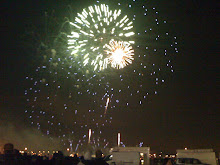
Since Bonfire Night fell on Thursday, most of the big public fireworks displays were on the weekend instead, and on Saturday night I walked with my friends Clare and Alex up to Blackheath to see the fireworks. It was great display, to music, and a big crowd was gathered. It really is very much like the Fourth of July celebrations in the U.S. I didn't take into account exactly how the crowds would impact our getting around, and afterward we made our way, slowy, slowly to Donna's house in Lewisham. The streets and busses were packed, so we walked from Blackheath to Lewisham Station (quite a ways) and then got a bus to Donna's arriving at 10 p.m.
We missed the burning of the guy but got there in time for Tim setting off some fireworks that came perilously close to the house, throwing a couple of old Christmas trees on the embers of the bonfire and creating a raging inferno, as well as mulled wine, hot soup, sausages, and pies.
Greenwich
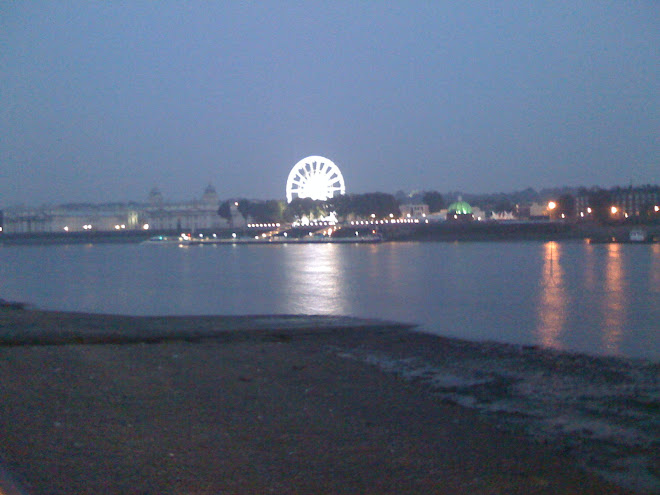
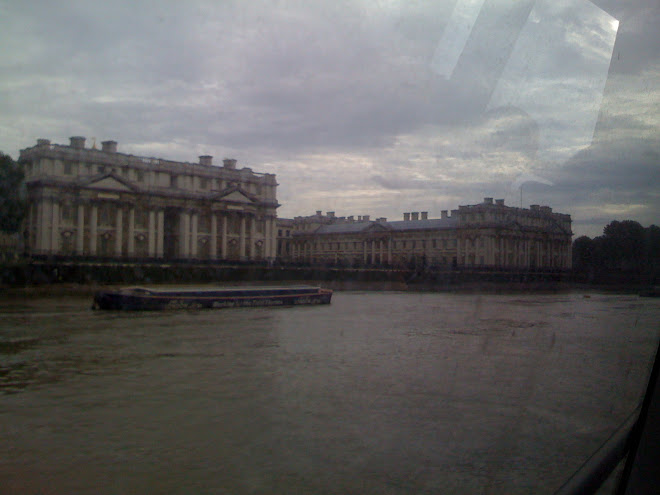
I'm staying in Greenwich, a place I love, and that I think Nell probably did, too. Charles planned to make Nell Countess of Greenwich, but died before he could do so. The Royal Observatory still stands where Nell would have known it as a new building. The view from the top of the hill is spectacular, as it would have been then. The Royal Park still rolls down to the river, and the Queen's House, which Inigo Jones designed for Charles's mother, Queen Henrietta Maria, still stands above what is now referred to as the Old Royal Naval College, the first building of which was one that Charles built to replace the old palace.
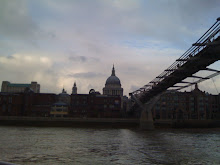
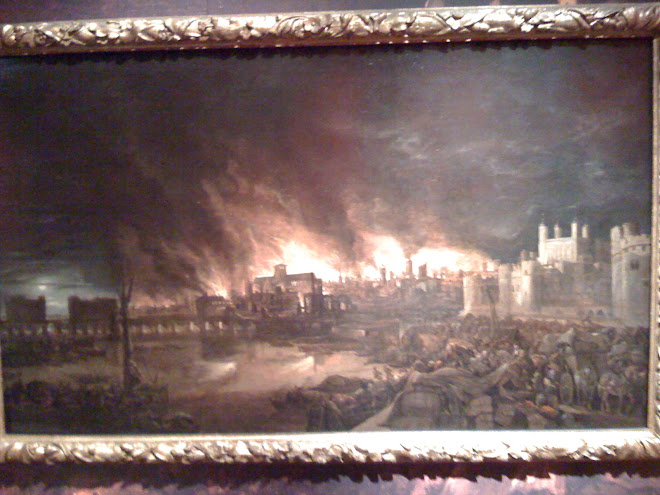
Of course there is much here now that wasn't standing in the 17th century. Looking west to the City, you can still see London Bridge (a different bridge than the one that Nell knew) and St. Paul's. Nell would have known the old cathedral, which burned in the Great Fire in 1666, and would have seen the early construction of the present cathedral, which was begun in 1675 and completed in 1710 but it is now almost lost in the forest of buildings. In her time, the area between the Tower and London Bridge was called The Pool of London, and was perpetually crowded with hundreds of ships and smaller vessels, loading and unloading at the "Legal Quays."
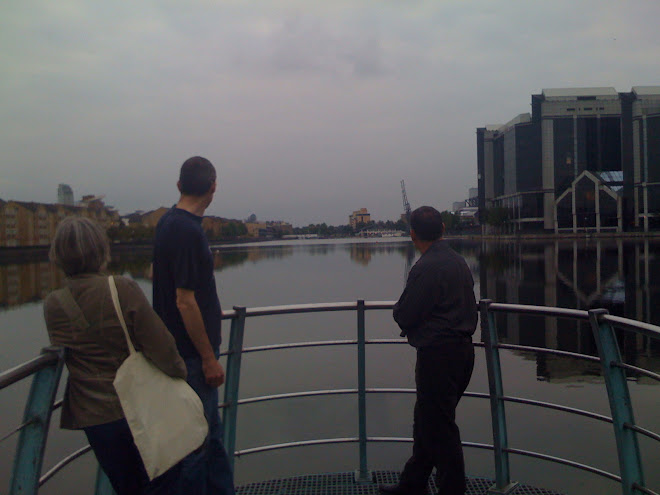
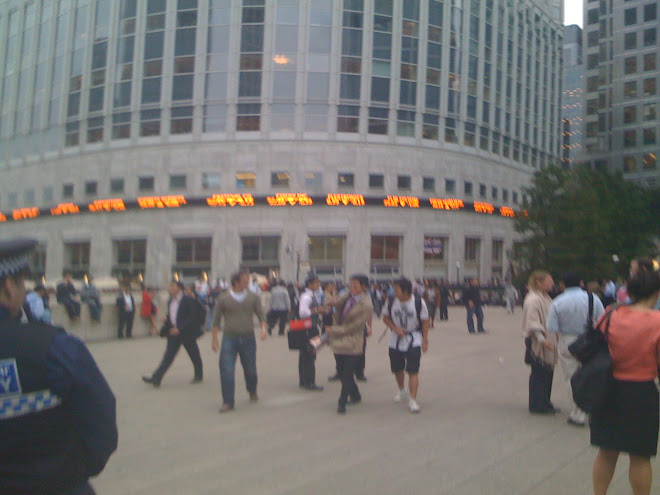
The Isle of Dogs, which was nothing but meadows in Nell's time (though there was a ferry running to Greenwich - Samuel Pepys wrote about taking it), became the site of the London Docks in the late 18th and early 19th century, which were built because the old docks could no longer accomodate the traffic. It was a massive engineering project, and the docks were some of the busiest in the world, but when container shipping was introduced, business began to fall off, and by the early 1970s, the area was derelict. The area's new life began in 1991 with the construction of Canada Tower, the first office building at Canary Wharf, which has since become a forest of towers and the home of many international corporations. It has virtually replaced Fleet Street as the centuries-old home of England's press, and has lured many financial firms from the City.
Bonfire Night
There's a scene in The Darling Strumpet when Nell experiences her first Bonfire Night. The Fifth of November is still the occasion for the annual commemoration of Guy Fawkes's failed 1605 plot to blow up the King and Houses of Parliament (http://en.wikipedia.org/wiki/Guy_Fawkes_Night). Since then, the Fifth of November has been celebrated with bonfires, firworks, and burning "Guys," or effigies of Guy Fawkes. Our commonly used term "guy" to refer to a man derives from this custom, incidentally. The guy came to mean not just the effigies that were burned, but any ragged-looking man, and thence just to any guy.
Since Bonfire Night fell on Thursday, most of the big public fireworks displays were on the weekend instead, and on Saturday night I walked with my friends Clare and Alex up to Blackheath to see the fireworks. It was great display, to music, and a big crowd was gathered. It really is very much like the Fourth of July celebrations in the U.S. I didn't take into account exactly how the crowds would impact our getting around, and afterward we made our way, slowy, slowly to Donna's house in Lewisham. The streets and busses were packed, so we walked from Blackheath to Lewisham Station (quite a ways) and then got a bus to Donna's arriving at 10 p.m.
We missed the burning of the guy but got there in time for Tim setting off some fireworks that came perilously close to the house, throwing a couple of old Christmas trees on the embers of the bonfire and creating a raging inferno, as well as mulled wine, hot soup, sausages, and pies.
Greenwich
I'm staying in Greenwich, a place I love, and that I think Nell probably did, too. Charles planned to make Nell Countess of Greenwich, but died before he could do so. The Royal Observatory still stands where Nell would have known it as a new building. The view from the top of the hill is spectacular, as it would have been then. The Royal Park still rolls down to the river, and the Queen's House, which Inigo Jones designed for Charles's mother, Queen Henrietta Maria, still stands above what is now referred to as the Old Royal Naval College, the first building of which was one that Charles built to replace the old palace.
Of course there is much here now that wasn't standing in the 17th century. Looking west to the City, you can still see London Bridge (a different bridge than the one that Nell knew) and St. Paul's. Nell would have known the old cathedral, which burned in the Great Fire in 1666, and would have seen the early construction of the present cathedral, which was begun in 1675 and completed in 1710 but it is now almost lost in the forest of buildings. In her time, the area between the Tower and London Bridge was called The Pool of London, and was perpetually crowded with hundreds of ships and smaller vessels, loading and unloading at the "Legal Quays."
The Isle of Dogs, which was nothing but meadows in Nell's time (though there was a ferry running to Greenwich - Samuel Pepys wrote about taking it), became the site of the London Docks in the late 18th and early 19th century, which were built because the old docks could no longer accomodate the traffic. It was a massive engineering project, and the docks were some of the busiest in the world, but when container shipping was introduced, business began to fall off, and by the early 1970s, the area was derelict. The area's new life began in 1991 with the construction of Canada Tower, the first office building at Canary Wharf, which has since become a forest of towers and the home of many international corporations. It has virtually replaced Fleet Street as the centuries-old home of England's press, and has lured many financial firms from the City.
Saturday, October 17, 2009
SOLD!
I'm very, very happy to say that my wonderful agent, Kevan Lyon of Marsal Lyon Literary Agency, has just sold The Darling Strumpet -- and my next book, which I've only just begun -- to Berkeley Publishing Group!
Darling Strumpet will likely be published in Fall 2010, and the next book the following spring. I'll be blogging about my new book, The Royal Miracle, during my research adventure beginning next week -- theroyalmiracle.blogspot.com.
Darling Strumpet will likely be published in Fall 2010, and the next book the following spring. I'll be blogging about my new book, The Royal Miracle, during my research adventure beginning next week -- theroyalmiracle.blogspot.com.
Subscribe to:
Posts (Atom)